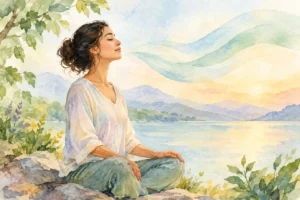
A retreat can bring you face to face with something you have been carrying for years: grief beneath the busyness, a longing for a more meaningful life, the exhaustion of always holding it together. That is why retreat integration matters afterward. A powerful breathwork experience is not meant to remain a beautiful, intense memory. Its deeper purpose is to become part of how you meet your actual life.
After days of intentional breathing, rest, reflection, honest conversation, and time away from familiar demands, many people return home feeling clearer, softer, and more open. Then the inbox fills up. Family needs attention. Old habits reappear. The contrast can be startling.
This does not mean the retreat did not work. It means the real work is beginning.
A retreat opens the door. Integration helps you walk through it.
Breathwork retreats create a rare kind of container. You are invited to pause the roles you perform every day and listen beneath the noise. With the support of skilled facilitators, a group, and a dedicated rhythm of practice, the nervous system may finally have enough safety to release what it has been protecting.
That release can be joyful, tender, disorienting, or all three at once. You may feel profound love and belonging. You may recognize a pattern in your relationships that you can no longer ignore. You may leave with a clearer sense of purpose, or simply with the realization that you need more rest than you have allowed yourself.
Insight is valuable, but insight alone rarely changes a life. We are shaped by repetition: the way we breathe in a tense meeting, the stories we tell ourselves after a difficult conversation, the pace at which we move through our days. Integration is the compassionate process of bringing what you discovered into those ordinary moments.
It is not about preserving a retreat high. It is about developing the capacity to stay connected to yourself when life is less spacious, less scenic, and far more demanding.
Why retreat integration matters afterward for lasting change
A retreat can interrupt familiar patterns, but your home environment is often where those patterns were formed and reinforced. The same responsibilities, relationships, and triggers that existed before the retreat will still be there when you return. Integration gives you a bridge between the expanded version of yourself you met during the retreat and the person making dinner, commuting to work, or navigating a hard conversation on Tuesday afternoon.
Without that bridge, people sometimes judge themselves for “losing” the transformation. They expect permanent calm, perfect clarity, or an immediate ability to make every needed change. This expectation can create shame precisely when gentleness is needed most.
Lasting transformation tends to be quieter. It may look like noticing your shoulders rise and taking three conscious breaths before responding. It may look like saying no without a long explanation. It may mean recognizing that a wave of emotion needs presence rather than a quick solution. These moments may appear small, yet they are how new inner pathways become trustworthy.
For some people, a retreat also brings unfinished material closer to the surface. This can be a natural part of emotional processing, particularly after an experience that has invited deep honesty. The goal is not to analyze every feeling or force a breakthrough. The goal is to meet what arises with paced, appropriate support. If you feel persistently overwhelmed, disconnected, unable to function as usual, or concerned about your safety, reach out to a qualified mental health professional or health provider in your area.
Your nervous system needs time to learn a new rhythm
A regulated nervous system does not mean a life without stress. It means having more choice in how you respond to stress. Retreats can offer a lived experience of this possibility: perhaps your breath deepened, your body softened, or you felt held in community without needing to earn it.
Coming home asks the nervous system to practice that experience in a different context. This is why trying to overhaul your entire life in the first week can backfire. A long list of promises may feel inspiring at first, then become another demand your system must carry.
Instead, choose a rhythm that is small enough to sustain. Five minutes of conscious breathing before reaching for your phone can be more transformative than a complicated routine you abandon after three days. The practice becomes powerful because you return to it, again and again.
What meaningful integration can look like
Integration is personal. A parent with young children, a therapist holding space for clients, and someone in the middle of a career transition will each need something different. There is no single correct way to honor a retreat.
Still, a few simple practices can help the experience settle into the body rather than becoming only a story you tell.
Create space before making major decisions
A retreat may reveal that a job, relationship, or living situation no longer feels aligned. That clarity deserves respect. But unless there is an urgent safety issue, give yourself time before making irreversible decisions.
Write down what became clear and return to it after a few weeks. Notice whether the insight continues to feel true once you are back in the texture of everyday life. Wisdom often becomes more precise when it is allowed to mature.
Keep a short, honest record
Journaling does not need to be elaborate. A few sentences can be enough: What am I feeling today? What did I notice in my breath? What do I need more of? What old pattern showed up, and how did I respond?
This record helps you see change that the mind might otherwise dismiss. It also reveals where you need support. Perhaps you notice that your anxiety rises every Sunday evening, or that you feel more grounded after time outside. These are useful invitations, not evidence that you are doing integration wrong.
Let the body have a voice
Retreat experiences are often embodied. You may have felt emotion move through tears, shaking, stillness, sound, or breath. Returning only to mental analysis can distance you from the intelligence that became available in your body.
Continue with gentle movement, walks, rest, nourishing meals, and breath practices that feel supportive rather than forceful. You do not need to recreate an intensive retreat session at home. In fact, a lighter practice may be more appropriate while your system is assimilating a deep experience.
Share with people who can listen well
Not everyone will understand what happened at a breathwork retreat. Some people may want a quick explanation, while others may minimize something that felt sacred or significant. Choose your listeners carefully.
A trusted friend, therapist, mentor, facilitator, or retreat community can offer the kind of witnessing that helps an insight take root. You do not need someone to interpret your experience for you. You need space to hear yourself more clearly.
Community turns inspiration into practice
One reason retreats can feel so powerful is that we remember we are not alone. Being witnessed without judgment can soften the belief that our struggles are private failures. The return home can feel lonely when that sense of connection suddenly disappears.
Staying in touch with fellow participants, joining an integration circle, or continuing with guided breathwork can help maintain a relationship with the part of you that woke up during the retreat. At Alchemy of Breath, this ongoing relationship with practice and community is considered part of the transformational path, not an optional extra after the “real” experience is over.
Community is not about dependence. It is about remembering that human beings integrate through relationship. We learn safety with others. We practice truth with others. And sometimes we need another person to remind us of what we knew when we were breathing deeply, resting fully, and willing to be seen.
Let integration be imperfect
There may be days when you return to old coping strategies. You may feel impatient, numb, reactive, or unsure what the retreat meant. None of this erases what you experienced.
Integration is not a performance of spiritual growth. It is a living relationship with your own humanity. It asks for honesty over perfection, consistency over intensity, and compassion over self-criticism.
The retreat may have shown you a possibility: that you can be more present, more connected, and more alive than you imagined. Let the days afterward be a gentle devotion to that possibility. One breath, one boundary, one truthful choice at a time.